
How To Build A Walnut Dining Table
In this DIY tutorial, I show you how to build a DIY Walnut Dining Table.
Tools and Materials
Digital Plans
Miter Saw
Festool Track Saw
Guide Rail Connector
Combination Square
MFT3
Tape Measure
Festool Domino
Alternate: Dowel Jig
Alternate: Biscuit Jointer
CT-SYS Vacuum
Wood Glue Dispenser
Glue
Glue Applicator
Bar Clamps
Rubber Mallet
Rotex Sander
40 grit
60 grit
80 grit
100 grit
120 grit
220 grit
320 grit
Soft Sanding Pad
Trim Router
1/4″ roundover bit
Rubio Monocoat
Rubber Gloves
Dust Mask
Lint Free Rags
Buffing Pad for Sander
Walnut Dining Table Plans
I'm working on DIY Plans for this walnut dining table build as well as walnut sliding barn doors.
So, this DIY plan will contain both the table and the sliding barn doors in a single DIY plan.
Complete the form below and I'll email you when the Walnut Dining Room Table plans are ready for download.
I'll also add a bonus to those who sign up for this notification. ;)
Success! Now check your email for a special discount code good for any of my existing and new digital plans.
These plans include:
- Detailed Instructions in PDF format
- 3D drawing (Sketchup) file
- Cut List
- Tool & Material List with alternative tool recommendations
- Woodworking Tips/Techniques
In the meantime, visit my online store for an assortment of detailed DIY plans and unique items for sale.
Introduction
My brother-in-law and sister-in-law recently completed a major renovation to their home.
Essentially, they tore down their existing home and built a new one in the same location.
So, they asked me to make a walnut dining table and matching walnut barn doors.
Ultimately, I agreed to do build this for them.
They sent me the pictures below along with measurements and I started the project.
The Last Free Item I Build
As a side note, this is officially the last 'free' item I will ever build for friends/family excluding my wife and children.
Why? Well, I've done this too many times over the last few years and it's taken up an enormous amount of my time.
Additionally, this is time I could have spent on revenue generating tasks to grow my business. because I like to help friends/family.
Lastly, I plan to write an article soon about hard lessons I learned since I started my business.
Learning to politely refuse requests from family/friends is vitally important.
Locate Walnut Wood
First, I contacted my buddy Charles at Riverside Lumber in New Orleans, LA. and gave him the amount of lumber I needed in board feet.
I sold my planer, so I needed S2S (Surface 2 Sides) Walnut wood.
Also, I used 8/4 (2″ thick) for the DIY Walnut Dining Table and 4/4 (1″ thick) for the DIY Walnut Sliding Barn Doors.
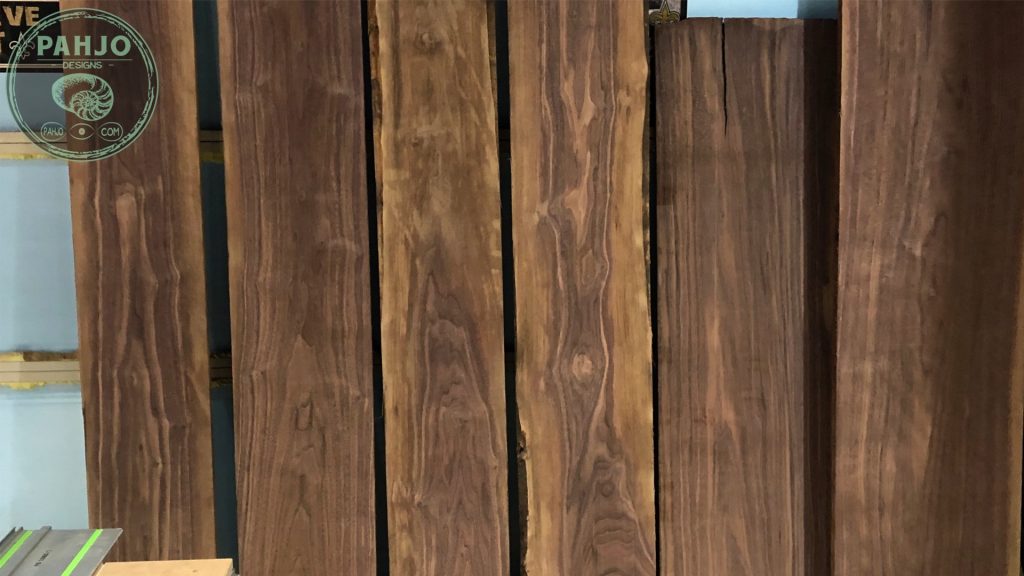
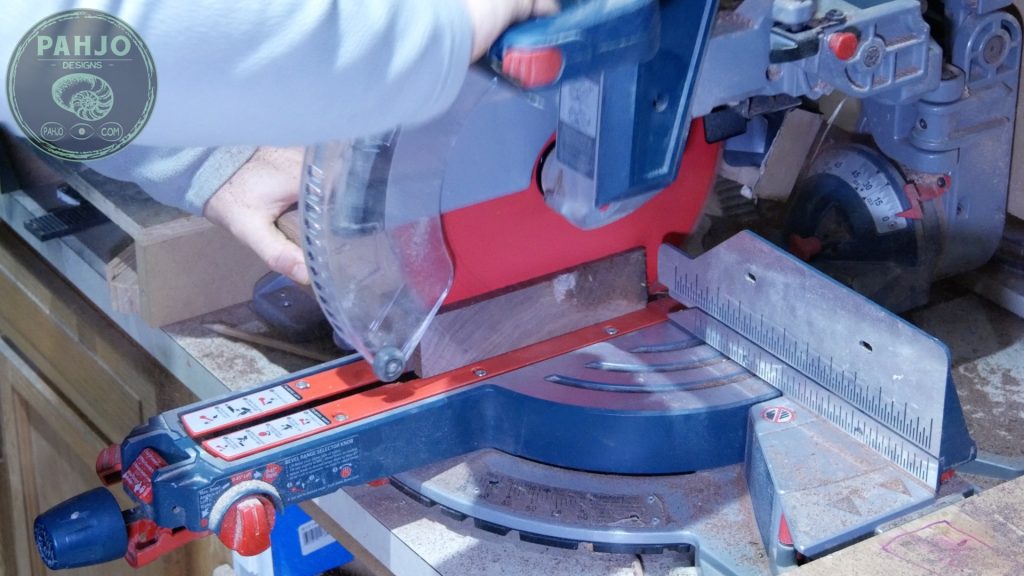
Mill Walnut Wood
First, I trimmed roughly 1/2″ off each side of Walnut wood.
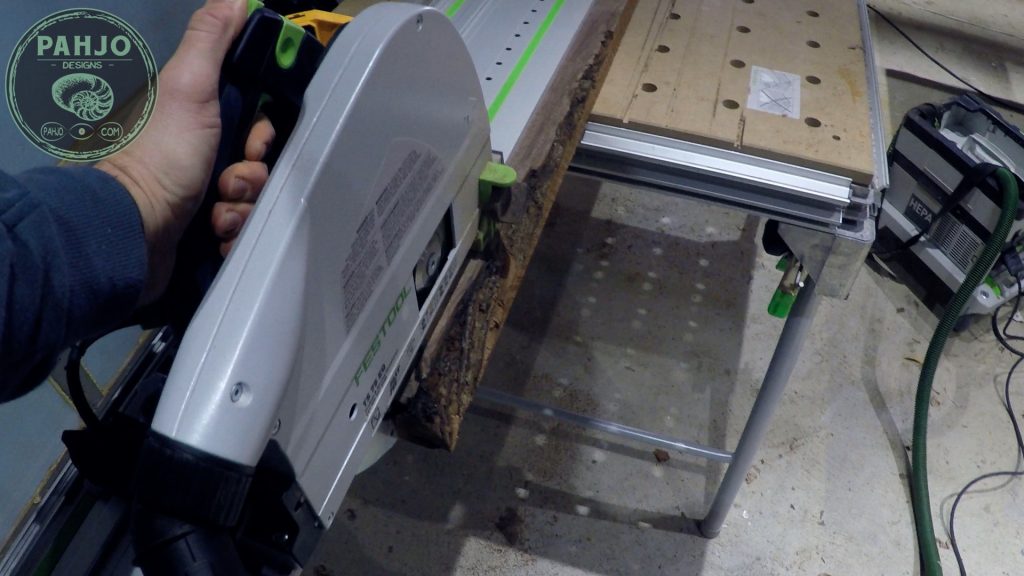
Joining Boards without a Jointer
Next, I used my track saw to trim roughly 1/8″ off each side of the 8/4 Walnut. This track saw does a great job of joining 2 boards together.
In fact, it takes the place of a jointer in my workshop.
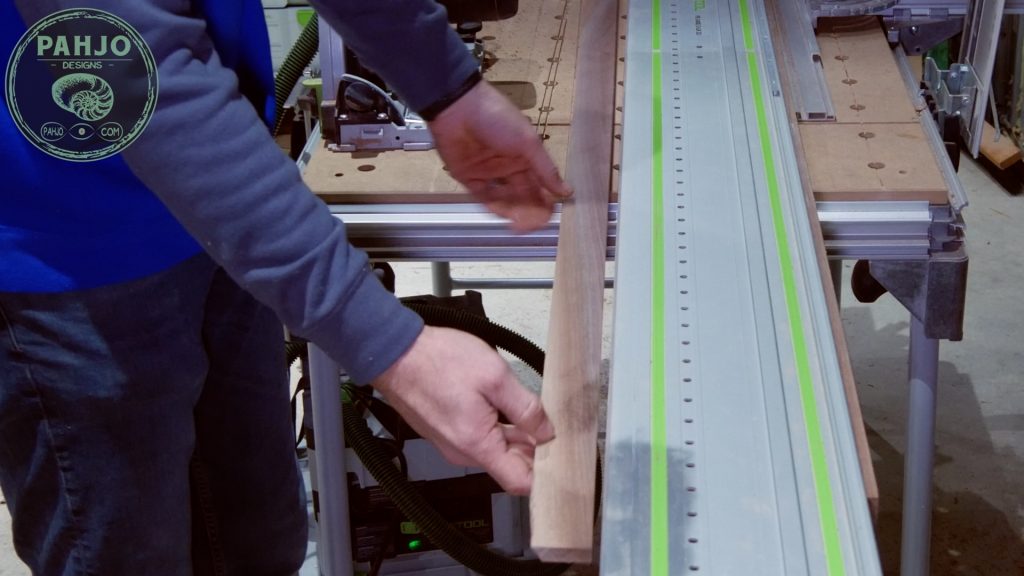
Why I Sold my Table Saw
The festool TS75 track saw combined with my MFT3 for cross cutting prompted me to sell my table saw.
Ultimately, it takes slightly longer for me to cut wood; however, this minor inconvenience is heavily outweighed by the space I gained in my shop.
Joinery for Table Top
I used my festool domino as the joinery method for this walnut table top.
Additionally, biscuits or dowels work as well.
First, I aligned the boards how I wanted them and stretched my tape measure from one end to the other.
Next, I made a pencil mark roughly every 12″ and approximately 4″ from each end.
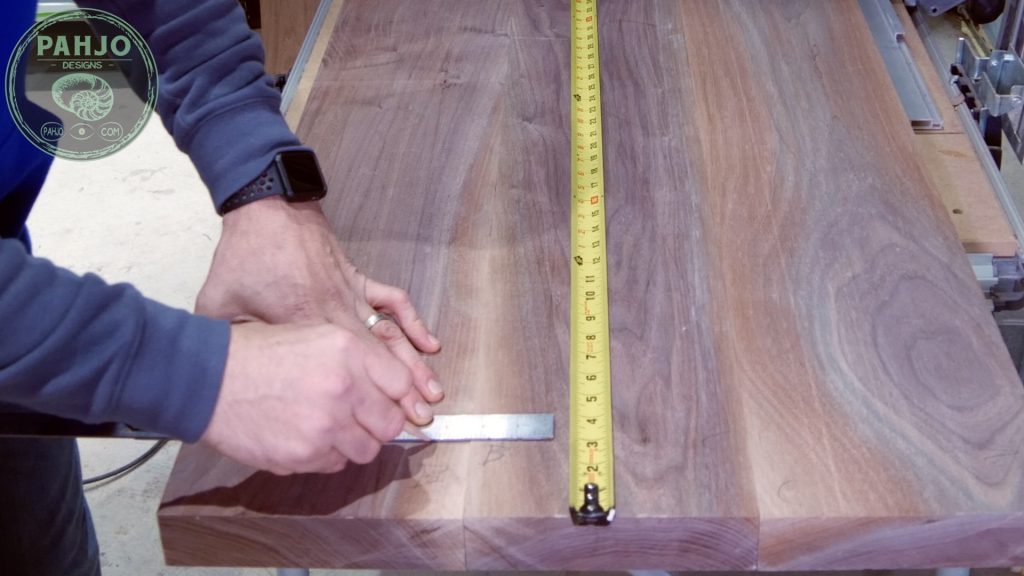
Then, I aligned my festool domino with the pencil marks and cut a mortise.
Glue Boards Together for Table Top
After I cut each mortise, I spread glue liberally along each side of Walnut.
Next, I inserted the dominos.
Clamping Tips for Table Top
I used my parallel clamps to secure 2 boards together.
While working quickly, I gradually tightened the clamps from one side to the other.
Once 2 boards are securely tightened and level, I loosen the clamps and attach the other 2 boards.
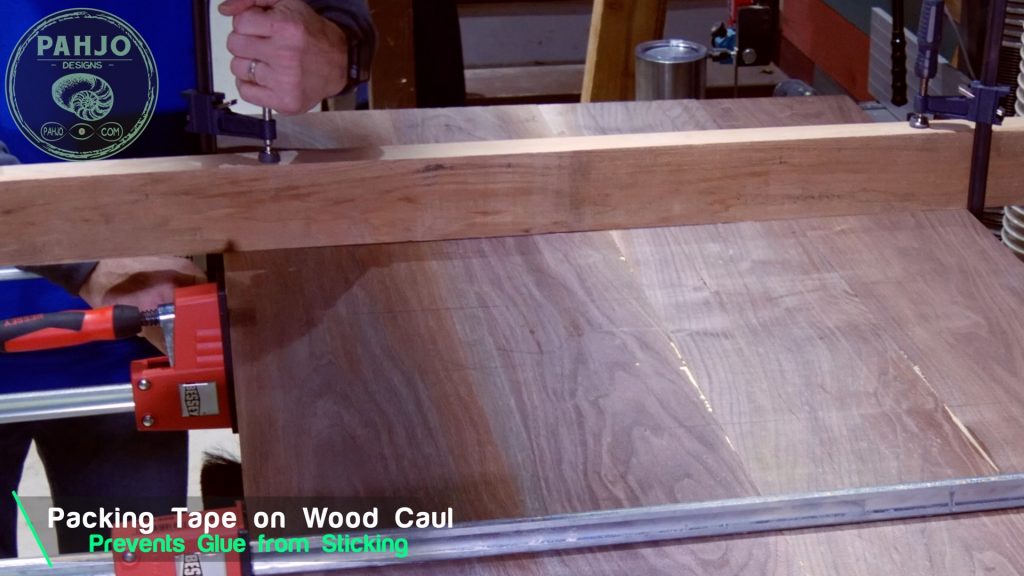
Then, I used a wood caul to keep the DIY walnut dining table level before I applied the final clamping pressure.
I wrapped the bottom of the wood caul with packing tape to prevent the glue from sticking.
Sanding Wood for a Professional Finish
While I realize sanding is boring, it is vital to wood table projects.
After watching many hours of instructional video, testing different sanders, sandpaper, and grits – I finally found the best combination which works consistently for me.
The main component of my sanding wood procedure is the Festool RO125.
Ultimately, this tool improved my quality and production more than any other tool in my shop. Moreover, it is worth its weight in gold.
Wood Sanding Grit Sequence
First, I only use my sander in rotary mode for hardwoods.
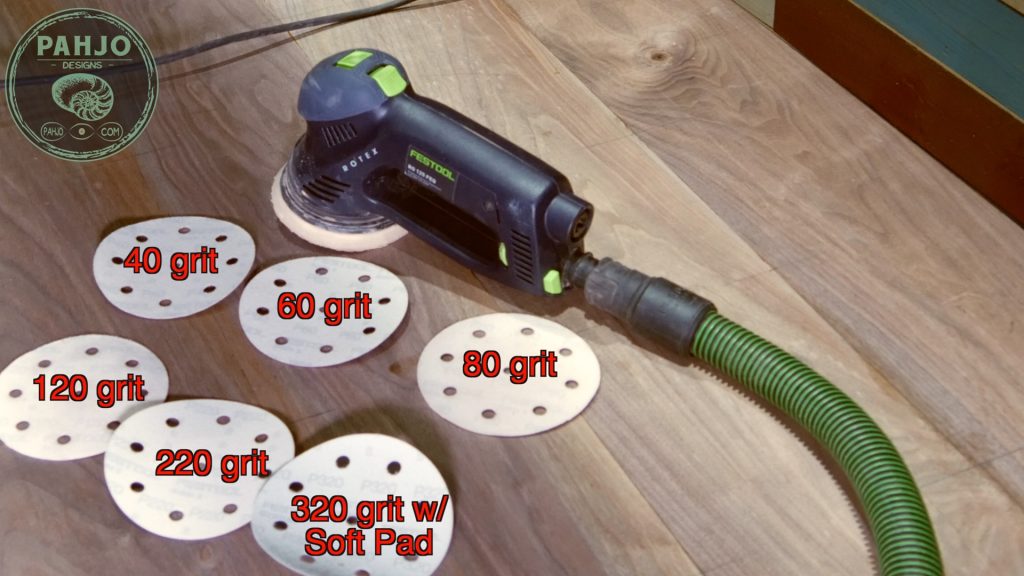
Next, I sand the surface with the following grits: 40 grit, 60 grit, 80 grit, 120 grit, 220 grit, and 320 grit.
At times, I go up to 800 grit and 1500 grit depending on the finish I use.
Wood Sanding Technique
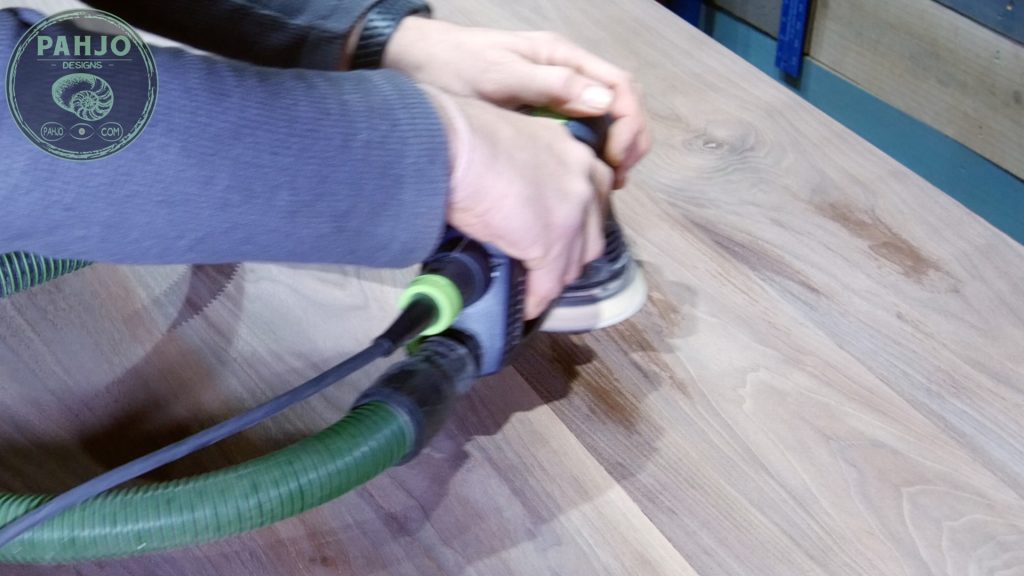
My simple wood sanding technique consists of working in a 24″ x 24″ section at a time.
First, I sand from right to left beginning at the bottom. I work my way to the top of the section.
Next, I sand the same section from top to bottom.
Ultimately, it reminds me of a tic-tac-toe pattern.
Then, I use a damp rag to clean the surface and raise the grain.
I sand the surface with 320 grit sandpaper again.
Cross Cut DIY Walnut Dining Table
After I'm done sanding, I trim each end of the table to size.
Roundover Edges With or Without a Router
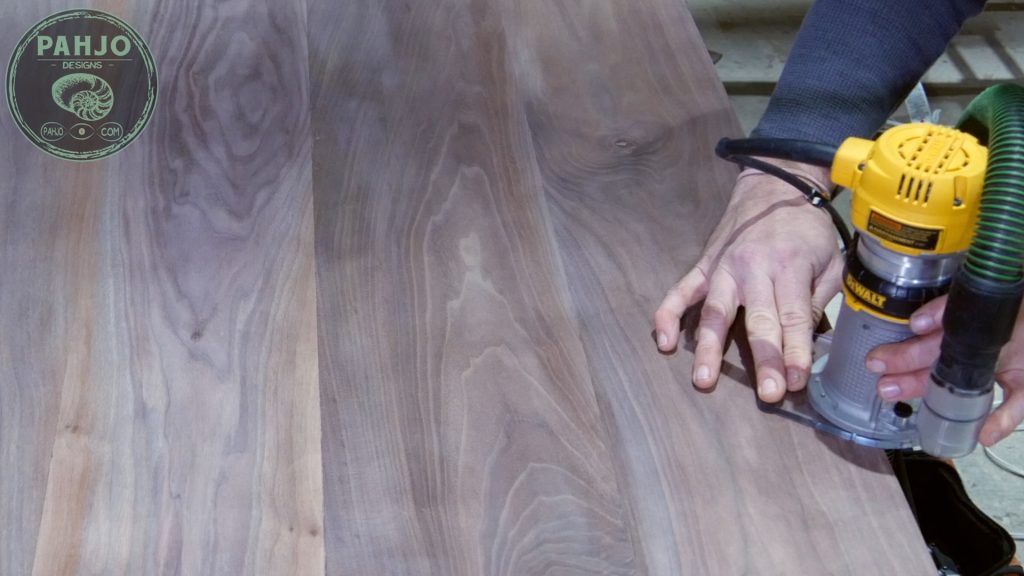
First, I used my trim router with a 1/4″ roundover bit to roundover the DIY walnut dining table.
Best Finish for Wood Dining Table
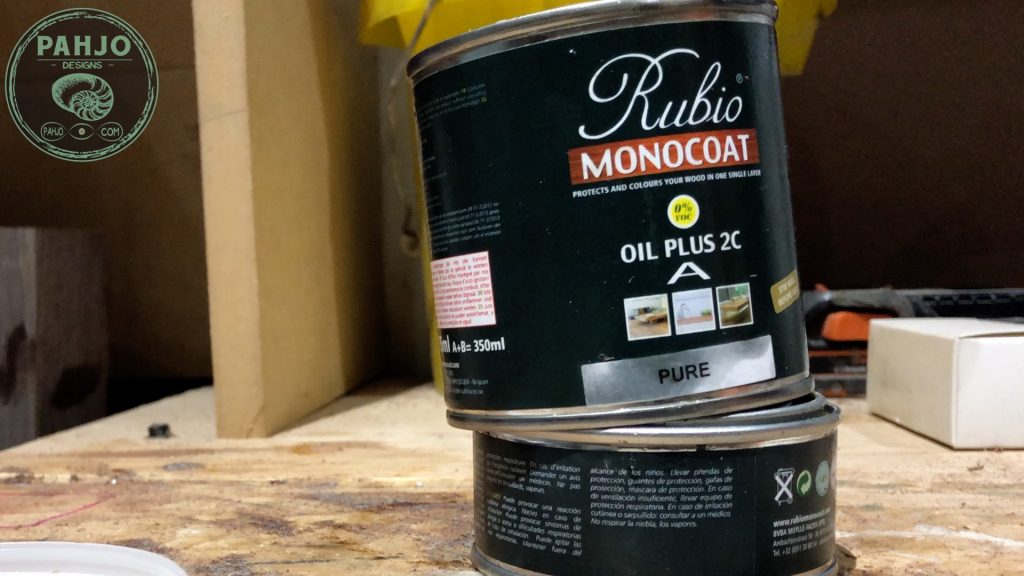
First, I chose Rubio Monocoat pure to finish this walnut dining table build. I've watched numerous videos rubio monocoat application and it seems like it performs well.
Additionally, I liked the idea of only applying 1 coat.
Rubio Monocoat Pure Application
First, I mixed the 2 parts according to the instructions: 2 parts A to 1 part B.
Next, I poured the finish and spread it across the table with a plastic spreader.
I didn't pour too much in order to avoid waste.
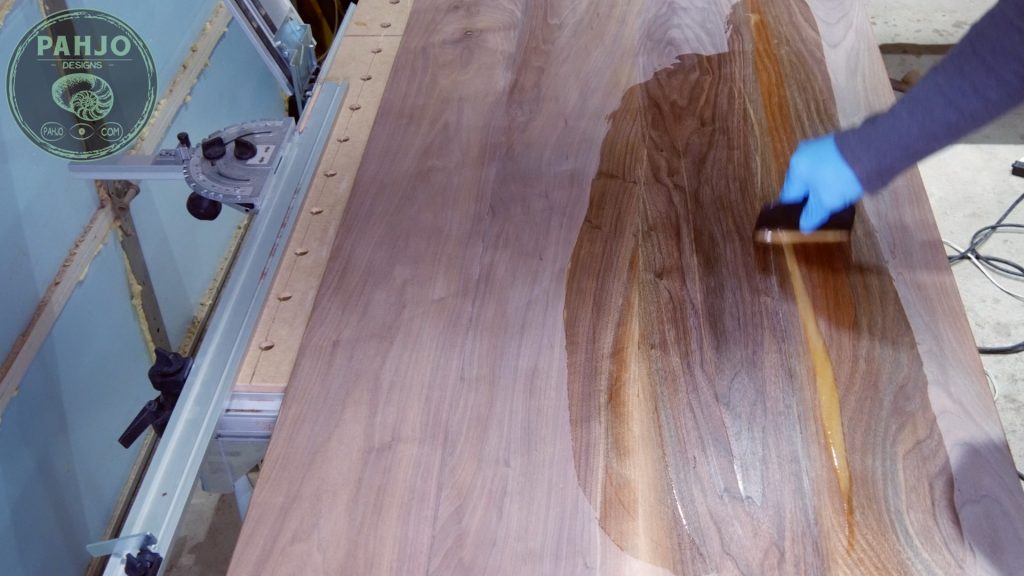
Then, I poured a little more on the opposite end of the table and repeated the process.
To cover the edges, I let a bead drip over the edge and spread it before it dripped.
Rubio Monocoat Application Buffing
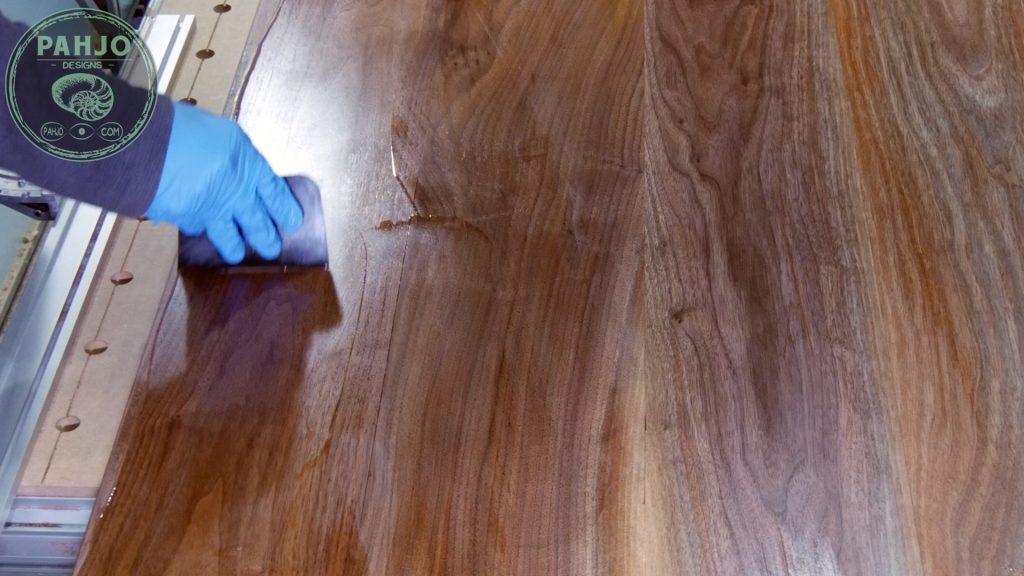
It is vital to not leave any material on the table, so I used a lint free rag to wipe off the visible excess.
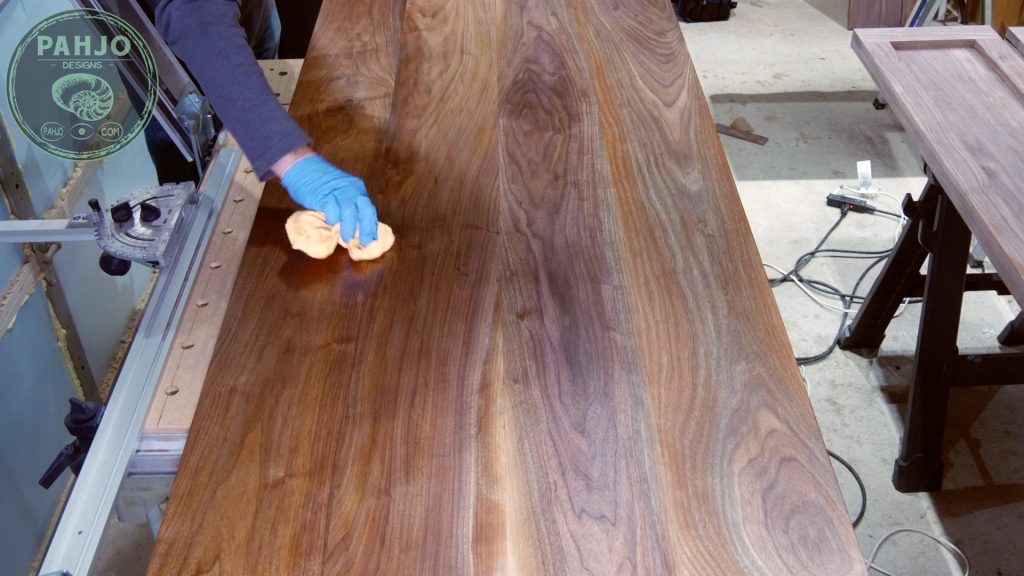
Next, I used my festool RO125 with a buffing pad to remove the remaining material. I buffed the table for about 10 minutes.
DIY Walnut Dining Table Bottom
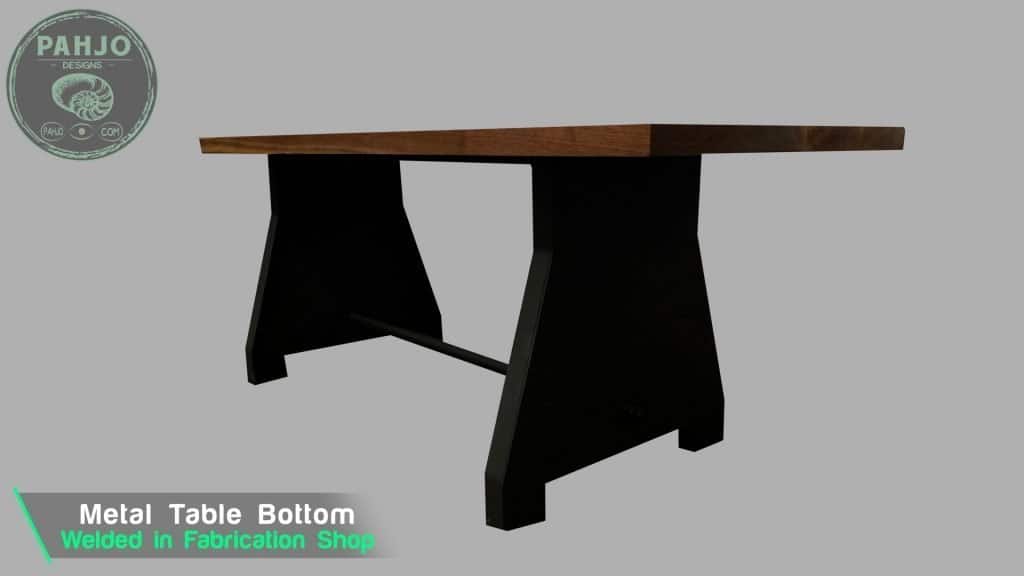
My brother-in-law hired a professional welder to build the table bottom.
The welder is my brother-in-law's close friend as well.
Although this is a skill I want to learn very soon, I don't know how to weld as of now nor do I own a welder.
As can be seen in the picture below, he did a fantastic job.
Conclusion
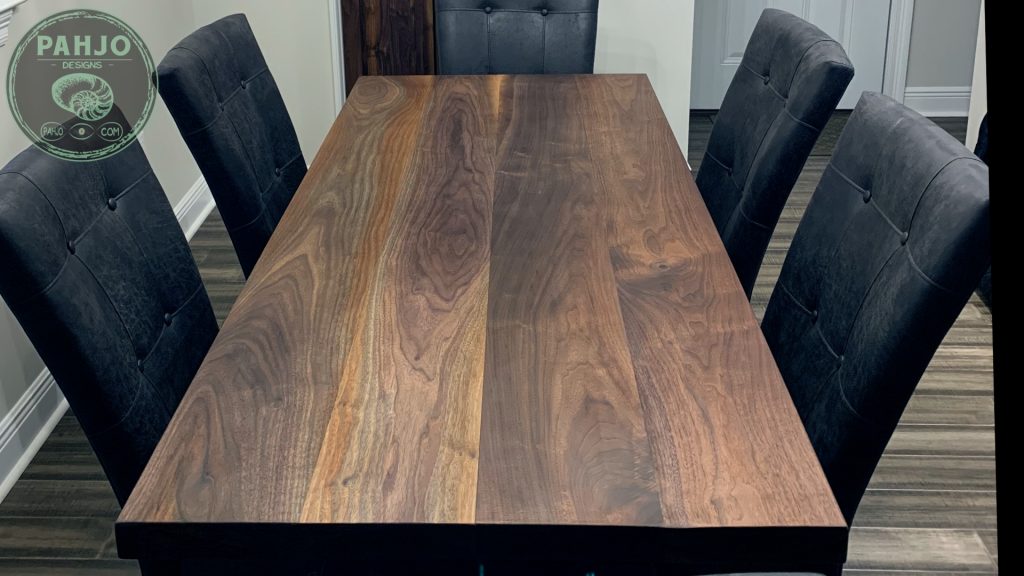
In summary, this was a fairly easy project and it turned out great. The matching DIY double sliding barn doors turned out great as well.
Lastly, checkout the farmhouse dining table I made for my sister and the pecky sinker cypress table I made for my mother in law.
How To Build A Walnut Dining Table
Source: https://do-daddy.com/diy-walnut-dining-table/

0 komentar:
Posting Komentar